
Sunday, May 22, 2011 10:18pm CDT

 
60 degrees    Cloudy    Wind  1 mph  SW
 
 
This has been another very eventful and wet day in the life of our loons.
 
There have been torrential downpours.
One of my neighbors said he had measured 7 1/2 inches in his rain gauge between yesterday and today!
 
The rain just can't seem to stop.  But more importantly, once again today severe thunderstorms and tornadoes were bouncing all over state.  Unfortunately there has been severe damage in areas of Minneapolis as well as other communities.  Sadly one man from out of state was killed in his car when a large tree fell on it!
 
Even with the damage and death it is no where as bad as many areas of the country have suffered this spring.
 
But once again today our loons lucked out and all the severe weather went all around them.  They were in the calm 'eye of the storm' and did not have to contend with severe wind but they did sit through a number of very heavy rainstorms and a lot of lightning and thunder.
 
But they stayed on the nest during the heaviest parts of the rain.
 
At dusk tonight, the loon and the nest floated on a beautiful sea of shimmering quicksilver.
 
But even now as I am writing, there was a wail from out in the dark.  It sounded like it was fairly close to the nest.  Then the loon on the nest answered with an ear piercing yodel!  So it is the male on the nest again tonight.
 
After 4 yodels from out on the lake and 3 answers from on the nest, the male left the nest to go out to meet the loon who had challenged him.
 
A symphony of yodels and tremolos and wails bounced back and forth across the lake from all directions.  It is beautiful if you don't know what the calls mean.  Even if you do know, it is beautiful but it also causes concern because you know that this is a confrontation between 2 pairs of loons.
 
One of the loons finally returns to the nest after about 24 minutes off the nest for the confrontation.  Anytime they are off the nest concerns me.  But it is relatively warm and so this amount of time should not hurt the eggs.
 
In fact, if there are chicks developing inside the eggs, they may be close to the point where they can generate some of their own heat.
 
We are rapidly approaching the time when things move fast and when they get real exciting.
 
If your family and friends have not started watching yet, now is the time to call them, email them, tweet them, Facebook them and use every other means to let them know now is the time to start watching.
 
From the "official" incubation time for loon eggs, the first egg should hatch Wednesday night, June 1st.
 
But .... and this is a big 'but' with a lot of disclaimers .... if I had to guess, I would guess that it might hatch a day or two earlier than that!  So it could even hatch on Memorial Day.
 
And then the moments are so fleeting!
For those of you who have asked, the loon chicks leave the nest within a day or two of hatching, usually never to return to the nest.  From that point on they are truly water birds.
 
The 2 eggs were laid 1 1/2 days apart but they will probably hatch closer together than that.  It is something called 'catch up', where the second egg sometimes hatches quicker than the first egg.  There are some biologists who say that they chicks actually communicate with each other while they are still in the egg.
 
There are so many things that we do not know nor understand.  Now if only we had a microphone where we could listen to the chicks inside the eggs talking to each other!
 
A loon chick is called "precocious" meaning that it is able to swim within a very short time after hatching.  Usually they might stay on the nest for about a day or so, and then they are gone.
 
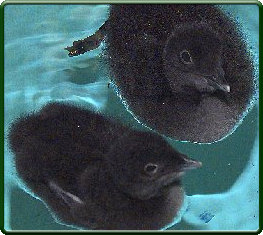
So your chance to see the hatching and the little black loon chick with the white breast and the stubby wings and the big feet is so fleeting.  If you miss it, you miss it.  There are no 'do overs' or long extended times of the chicks being on the nest where we can watch them.
 
So get ready for the BIG miracle that is about to happen.
 
This is 'reality tv' that beats anything you will ever see anywhere else.
 
 
Questions or Comments?   LoonCam@yahoo.com
 

Saturday, May 21, 2011 8:42pm CDT

 
59 degrees   Thunderstorms   Wind  3mph E
 
 
Have  you had enough drama for one season yet?
 
After an all-night rain and heavy rain this morning, late afternoon turned into a beautiful, quiet, sunny blue sky day.
 
But then tonight as if out of no where, numerous severe thunderstorms and tornadoes developed over a broad section of the state!
 
As we say in Minnesota, if you don't like the weather, wait five minutes.  [I am sure some of you in other states say the same thing.]
 
Tornadoes and large damaging hail were heading toward the lake.
 
One tornado was confirmed not very many miles away.
 
But once again thank God nothing severe hit our loons.
 
I had a couple people tell me that we had hail but if we did, I missed it.  I was on the phone with my brother during much of the storm and we were tracking the storm on radar online to see how close it was going to come to each of our houses.
 
But the loon sat firm all through the rain and kept the eggs warm and dry...although dry is not all that important to the eggs.  The loon brings quite a bit of water every time it gets back on the nest.  That added moisture may actually help the eggs.  If you have ever hatched duck eggs, some people recommend misting the eggs once in a while.
 
So a little moisture and even rain may not harm the eggs at all.
 
But then several yodels almost blew my speakers out!
 
That answered which loon was on the nest.  It was the male since the male is the only one that yodels.
 
That is somewhat unusual to see the male actually yodel while he is on the nest.
 
There were other yodels from somewhere out on the lake and that is obviously what he was reacting to and what he was answering.
 
Then he left the nest!
 
That is the disadvantage of having another pair of loons on the same lake.  They may draw each other off their nests and the conflicts could affect the hatching of the eggs.
 
When I looked out across the lake, I could not see the other male that was yodeling even though I could hear him.  The male swam out to another loon that was obviously the female.  They swam around for a number of minutes - although I didn't time it, I would guess they were off the nest about 10 minutes during the rain.
 
I am probably like many of you.  I know I need to trust their instincts.  But when they are off the nest, especially in the rain, everything in me screams, 'Get back here!  Don't you know you have 'little ones' that are depending on you?!
 
But then one of them came back to the nest, did the traditional egg roll and settled on the eggs.
 
Once again the lightening and the thunder and the rain are picking up.  But the radar is not showing anything severe.  Most of the severe weather is well beyond us.  Hopefully this will be just a 'garden variety' thunderstorm with nothing severe.  Although we have had enough rain for one day!
 
Earlier today the loon spent a lot of time in full hangover position.  I am not sure what that was about.  There were no boats close by.  There were no people along the shore.  I even looked for eagles and could not see any flying anywhere.
 
The loon kept in the hangover posture even though there did not appear to be any danger.
 
Sometimes they see and feel things that we can only wonder and speculate about.  And sometimes there are no explanations that make any sense to us.  But apparently something makes sense to the loons.
 
But for now, all is calm on the nest once again.
 
We can only hope that it stays that way for the next week or so.
 
Because in a little over a week we should see the first little loon chick peek out from under the wing and take in the wonder of a big world he has never seen before!
 
 
Questions or Comments?   LoonCam@yahoo.com
 

Friday, May 20, 2011 7:28am CDT

 
61 degrees   Cloudy   Wind 2mph N
 
 
The loons continue their faithful vigil on the nest this morning.
 
They are now more than half way to the goal...two new little chicks.
 
Today promises to bring rain to the lake and our loons.  In fact, it should be rainy for the next several days with the possibility of thunderstorms this afternoon and tomorrow.
 
Some have asked how much 'territory' or how big a lake a loon needs or will protect.  
 
Some have said that they need at least 10 acres and I certainly would not argue with that.
 
However, a more important criteria is if the loons can stay out of sight of each other.  Therefore if a lake has many bays and fingers it probably can support more loons.  The loons are able to go back into those bays and most of the time stay out of sight of other loons whereas on a round lake with no bays, the loons are in sight of other loons most of the time and that raises the potential for confrontation.
 
Last night I watched as both loons were off the nest and swimming together.  The male was issuing his yodel call which is his territorial call.  I could see no other loons in sight.  But then from across the lake came the call of another loon.
 
The male would extend his neck parallel to the surface of the lake and yodel two or three times.
 
It was his way of saying 'this part of the lake belongs to me!  Stay away!'
 
A loon will often turn as he is making this yodel call as if to broadcast it to a larger section of the lake.  Normally I have seen them turn 45 to 90 degrees while making the call, just like 'beaming' it to different parts of the lake to let anyone and everyone know that he is here.
 
In some studies that have been done, loons tend to establish very specific lines which define their territories on a lake.  Invisible lines but lines nonetheless.  And they seem to know where those 'lines' are.
  
Someone asked about the 'high twilling whistle' which can be heard late at night.
 
I am not completely sure I know what you were hearing but I am almost sure.  It probably is frogs that you are hearing.  Specifically spring peepers.  They all join in a song that can almost be deafening at times.  It is one of my favorite sounds of spring.  When you hear the spring peepers sound begin their chorus it is one of the surest signs that spring is actually here.
  
Sit back, relax and enjoy our loons and all the good things of life!
 
 
Questions or Comments?  LoonCam@yahoo.com
 

Thursday, May 19, 2011 5:37am CDT

  
50 degrees  Clear  Calm
 
 
On a Minnesota spring morning, one loon sits on the nest while the other one floats nearby.
 
The sun is just ready to peak over the eastern horizon.
 
The avian choir has begun its concert to salute the dawn.
 
What a beautiful Minnesota morning it is.
 
There are times when I allow things to crowd in around me.  To become too busy.  To let pressures get to me.  To have to do this.  To have to do that.  To not have enough time to get done what I want to do and what needs to be done.   To forget the gift of what has been given to me.  To stop and look and listen.
 
A morning like this is the perfect reminder to do just that.
 
To slow down.  To savor the moment.
 
To look at the small things that go unnoticed in the normal busyness of life.
 
Things that are there all the time.  But that we never stop to see.
 
The pink of the morning sky.  The lazy movement  across the surface of the water.... not a ripple, not a wave, just smooth movement of water on water.  The clear song of a Baltimore oriole.  The hoarse crackling sound of a sandhill crane.  The coarse caw of a black crow.  The trilling of purple martins on the wing.
 
May your day be filled with the wonder of life and the miracles that have been placed all around you for you to enjoy.
 
On this beautiful morning, however, there is one thing that is on the loon's mind.
 
A dedication to two eggs that keeps them on the nest 24 hours a day.  A bird that is normally wild and free is now 'tamed'.  Inexorably drawn to sit on a nest.  Ever alert.  Ever watchful.  Always looking for potential danger.
 
We are now halfway through the normal incubation for the first egg.  Fourteen days and fourteen days to go.  Although I would expect that we do not have 14 days left and that the egg may very well hatch a day or two earlier than that.  But the 'normal' due date for our expectant parents is June 1st.
 
I have often described watching the loons on the nest as watching grass grow or paint dry.  But there is something that is so mesmerizing about it that we can't take our eyes off them.  And then something happens that makes all the watching worthwhile!
 
But now that we are in the 'boring' part of the nesting cycle, let me mention a couple other things that make loons such amazing birds.
 
Most birds have bones that are almost hollow, interlaced with a 'swiss cheese' of open areas.  This makes the bone very light but strong.  It allows most birds to fly by not having so much weight to get into the air.
 
But a Common Loon has bones that are nearly solid.
 
This works well for them being birds of prey that spend most of their time in the water.  The solid bones allow them to easily make deep dives whereas another waterbird would tend to pop back up to the surface because of its hollow bones.
 
Loons have been verified to dive to depths of 250 feet and more!
 
But these almost solid bones also mean that there is extra weight to have to lift into the air to become airborne.  That is why a loon requires a long expanse of open water in order to get into the air and fly.  They may require up to a quarter of a mile in order to take off from the surface of the water.
 
These solid bones allow a loon to do something else that almost no other water birds can do.
 
Loons normally dive when they want to go underwater.
 
But they can almost literally 'sink out of sight'.
 
Loons can compress the feathers on their body to squeeze out any air.  And they can also compress small air sacs or bladders within the muscles of their body to decrease their buoyancy.  Most of the time a loon rides pretty high in the water.  But there are times that a loon will swim with its body almost completely submerged, just by adjusting how buoyant it is.
 
You will most often see this behavior if the loon feels threatened or if it does not want to be seen.  Then it will just sink lower and lower in the water until sometimes only its head is exposed.  I have seen times when a loon has disappeared under water and I have watched to see where it came back up to the surface.  Only to realize that the loon had surfaced with only the top of his head and his eyes and his bill above water.
 
Just enough of him exposed to be able to breath and to see what is going on around him.
 
Had I not been watching very closely, I would have never even seen him nor have been aware that he was even around.
 
Yet one more of the many things that makes our loons so amazing.
 
So today as you watch the loons, also watch for the many other wonderful little miracles that Someone has placed into your life to make it richer and even more beautiful.
 
 
Questions or Comments?   LoonCam@yahoo.com


Wednesday May 19, 2011 7:08am CDT

 
46 degrees   Clear   Wind  Calm
 
 
On a sunny northern spring morning, our loon sits faithfully on the nest.
 
They had a quiet night last night.  
 
A lake of glass with no wind.
 
These are the days that there tend to be 'convection winds' during the day but with the setting of the sun, those winds die down and the lake becomes quiet as can be.
 
The loons deserve all the restful time they can get.  Once the chicks are born, it becomes a non-stop task of catching enough small fish to feed their hungry charges.
 
There are some people who have asked about the nesting platform itself so let me say a few words about that this morning.
 
Nesting platforms like this help loons because it gives them a place to nest that puts them out of reach of many land-based predators.  Many of their natural nesting areas along the shore have also disappeared as more and more lakes have become developed.
 
In a totally wild setting, loons will often seek out a small island to build their nests.  Many times they will use old muskrat houses and build their nest on the top of the house.
 
One of the worst predators of loon eggs on the nest are raccoons.
 
Skunks and mink are also known predators of loon eggs.  These animals are capable of scaring the loon off the nest and then making a meal of the eggs that are left unprotected.
 
On an island, or in this case a floating nesting platform, the nest is out of reach of most of these animals.  They do swim and still could possibly reach the nest, but usually will not put in the effort to reach the eggs.
 
With lakeshores becoming more and more built up, it also introduces dogs and cats and human traffic to the mix and they will scare the loons off the nest.  After being scared off enough times, either the eggs are damaged or the loons will just abandon the nest.
 
So a floating nesting platform like this removes many of the dangers for the loons and it resembles small islands that they normally would look for in the wild.
 
We have been very fortunate with the usage of this particular nest in that it has been used and eggs have been laid every year since it was first placed on the water.  If I remember right, one study showed that only 42% of nesting platforms ever actually get used.
 
The nesting platform itself is built of a square of 4 inch PVC pipe.  It is approximately 5 feet by 5 feet.  The PVC pipe joints must be very carefully sealed or the frame will simply fill with water and sink.  To give the nest additional support, the interior of that 5x5 foot frame is filled with about 4 to 6 inches of foam sheeting.
 
This whole assembly is then wrapped in plastic "snow fence" to hold everything in place.  I wrap the plastic snow fence around the platform in 'both directions' to give it the greatest structural integrity.
 
Then around this whole assembly, I wrap the entire platform both directions with landscape fabric.  I do this to try to eliminate all the small holes that a chick could fall through and become trapped.
 
Only after all of this has been done is the platform ready for the nesting material itself.
 
I usually rake up the weeds that have normally washed up on shore and place them on the platform to a depth of about 6 inches.  In addition to weeds washed up on shore, I cut dried cattails that are from the previous year's growth.
I try to use the cattails to build a 'structure' under the other nesting material that will help keep all the material from being washed away by waves or blown away by the wind.  Both of these thing are very real problems.
 
Use whatever is available to you but try to put yourself in the loons place and ask what they would normally use that is available in your area.
 
Loons will use whatever is available.  There are instances of loons just making a slight depression in the sand or gravel along a lakeshore if nothing else is available.  I have personally seen a loon nest in the Boundary Waters Wilderness Canoe Area where a loon used a slight depression in a rock sticking out of the water in the middle of the lake.
 
So quite frankly, the amount and type of material that they have available to build this nest is truly a "Ritz Carlton" for them.
 
Once all of this material is on the nesting platform it is ready to put out in the water...and hope for the best.  This is the time that you really realize how little control you have over anything.  You can put everything out there.  But ultimately it is the decision of the loons whether they will use it or not.
 
And like I said, I have been very fortunate that the loons have used this particular nest every year since it was put out.
 
There are some older research papers that I have read that claim a loon must have access to water that is at least 5 feet deep right by the nest.  I have not found that to be the case at all.  The depth of the water by this nest is normally 2 to 3 feet deep and the loons seem to find that completely acceptable.  When you realize that they normally nest on the edge of the shore, I think they would tolerate water depth even less that that.
 
But it is important as they slip off the nest that the water is deep enough for them to dive and swim away unnoticed if danger threatens.
 
You can anchor the nest with any type of anchor that is heavy enough to hold the nest in place during high winds.  If you have an area that is out of the wind, that is even better.  I use two anchors on this nest.  One is a 'mobile home' anchor that is screwed into the bottom of the lake and stays in place from year to year.  The second anchor is simply a cement block.
 
The two anchors keep the nest from twisting around and around in the wind.  For this particular nest that is especially important with the tv and audio cables that come off the nest to bring you this picture and sound.
 
In addition to the nesting material, for the last number of years I have started placing plants on the nest to help hold the materials in place and to keep them from being washed away.  The two types of plants that have been the most successful for me are clumps of iris and daylilies.  They have definitely helped to keep the waves from washing the nest away.  A side benefit is that you may actually have some flowers bloom on the nest.
 
This year some of you have asked what the yellow flowers are that are already blooming.  As best that I can tell, it looks like dandelions that have grown naturally from seeds that were apparently in the nesting material that I put on the nest.
 
Once you have done all of that work, you can only wait and hope that the loons use the nesting platform. 
 
The loons will rearrange whatever material you provide for them and make a nest that fits them exactly.  One year I thought I would 'control' where they built the nest on the platform so that it was perfectly centered for the camera.  So I used the nest from the year before and added more material around it.  I felt so smug about how smart I was!
 
Well, the loons had different ideas.  They promptly tore the previous years nest apart and built the new nest exactly where and how they wanted it.
 
Be sure to check with your state department of natural resources before you build and place a loon nest to see if they have any advice or any regulations that you need to follow.
 
Your goal should not be to have "tame" or "pet" loons.  Your goal should be to help loons be more successful in nesting and raising young loon chicks.
 
The average survival rate for loon chicks is only 0.62 chicks per nest per year.  Not a very high success rate.  So even a slight increase in that success rate means that loons will be around for years to come.  Once again I have been humbled at the high success rate that we have had with this particular nest.
 
[If you want to see the old tv program from several years ago about building the nest, you should be able to find it here on the MNBound TV tab.  They repeated the program on program #593.  There have been many changes (hopefully improvements) in how I do the nest since that program was first broadcast a number of years ago, but it will give you the basics of the nesting platform.]
 
 
Questions or Comments?  LoonCam@yahoo.com
I will try to read all emails but I may not be able to respond personally because of the volume of emails.